

01 Sep What to Do After MBBS in China? Career, Specialization & Licensing Options
Graduation marks a significant achievement for an MBBS student in China, but it doesn’t end their journey. For Pakistani students, after the above, they might be going back to Pakistan, doing postgraduate medical education, opting for specialization, taking up clinical practice, research/ public health, or pursuing a career in another country.
The route you take will be based on your academic foundation, the university you attended, internship or on-the-job training you received, licensing requirements, and your desired career path as well as the country where you would like to practice.
Thus, students need to consider their plans after MBBS before they finish their studies. Knowing the options can assist you in your medical education and career decisions.
If you’re still not sure about studying medicine in China, you can also read our detailed guide on Is MBBS in China Worth It? to evaluate the pros, cons, financial aspects, and future prospects.
What Can You Do After MBBS in China?
There are several possible career and education paths for MBBS graduates after completing their MBBS program in China. Their choice will depend on what they wish to do and what is needed in the country they want to pursue their career.
Common options include:
- Returning to Pakistan and enrolment on the relevant medical registration process.
- Applying for specialization (postgraduation) in medicine
- After obtaining a licence, entering into clinical practice
- Exploring medical residency opportunities
- Pursuing careers in medical research
- Transitions to public health and health care management
- Exploring work in the hospital
- Exploring further education in another country
- Building a career in research or academia related to health care
No one can say that every graduate will follow the same path in their career. A student who is preparing to go for medical practice in Pakistan would have different requirements as compared to a student who prefers pursuing post-graduation or wants to practice his/her medical career abroad.
The Pakistani students who are planning to pursue medical education should also know the entire study plan including admission, selection of universities, graduation and planning for further studies. Our MBBS in China for Pakistani Students Guide offers a more comprehensive overview.
Specialization After MBBS in China:
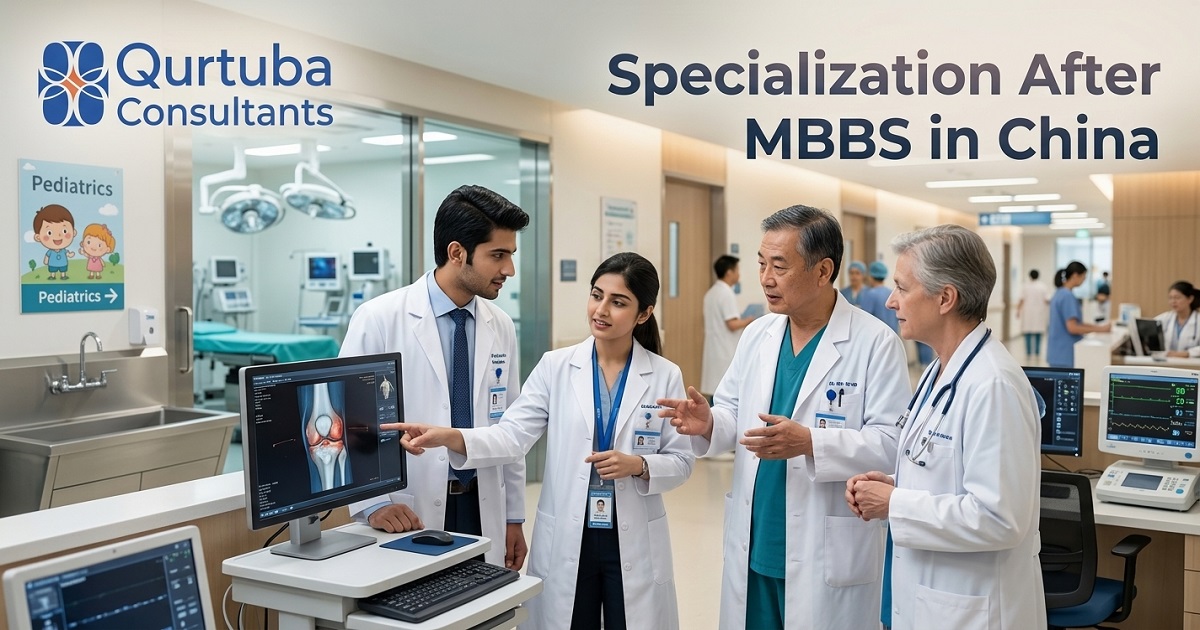
Many medical graduates take up post-graduation to specialise in an area of medicine. Graduates are prepared to pursue careers in such areas as:
- Internal medicine
- General surgery
- Pediatrics
- Obstetrics and gynecology
- Cardiology
- Radiology
- Dermatology
- Anesthesiology
- Psychiatry
- Pathology
- Emergency medicine
- Other medical specialties
The access and prerequisites for continuing education, as well as the length of the training and licensing considerations, differ from country to country and institution.
It is especially important for Pakistani graduates to know about the registration and post graduate training requirements that are relevant to their specialization pathway.
Is Postgraduate Study Necessary After MBBS?
While the MBBS degree is the initial step towards a medical career, the subsequent path varies according to the medical professional’s desired specialization.
Some graduates may wish to pursue further postgraduate medical training and others may first need to undertake relevant registration requirements and clinical experience.
Students who wish to specialize should do research on:
- Eligibility requirements
- Licensing or registration requirement(s)
- Entrance exams (if applicable)
- Clinical training requirements
- Program duration
- Recognition of the qualification
- Cost & funding options
Don’t go with any postgraduate program just because it’s out there. The first consideration should be its recognition and relevance to your intended career destination.
Can Pakistani Graduates Return to Pakistan After MBBS in China?
After completing their MBBS in China, Pakistani students may consider returning to Pakistan to continue their medical careers.
Graduation from a Chinese medical university does not automatically grant a graduate the right to practice medicine in Pakistan. Pakistani graduates must meet the applicable registration, licensing, examination, documentation, and other requirements set by the relevant medical regulatory authority at the time of application.
Since medical laws and rules are subject to change, students are advised to check the latest rules with the Pakistan Medical and Dental Council (PMDC) before making career decisions.
When choosing a Chinese university, it is especially important.
Students should also check our article on PMDC Approved Medical Universities in China and check out themselves the latest requirements for recognition and registration for their case.
Why Recognition Matters:
Another essential factor that needs to be taken into consideration while opting for a medical university is the recognition of the degree given, and it should be suitable for the student’s future medical career path.
Students should consider:
- Recognition status
- Where relevant, University accreditation
- Program structure
- Clinical training
- Internship arrangements
- Licensing implications
- Future postgraduate opportunities
When choosing medical recognition, never make a decision based on a list, social media post, agency or university advertisement.
Medical Licensing and Registration After MBBS in China:

Medical licensing is not the same as obtaining a medical degree.
An MBBS degree indicates that the medical education is completed and permission to practice medicine is based on the conditions set by the corresponding regulatory body.
The process that may apply for Pakistani students may involve the following requirements:
- Medical degree documentation
- University recognition
- Registration
- Verification
- Examinations where applicable
- Internship or clinical training program.
- Additional documentation
- Other regulatory conditions
The requirements may vary with time as students should always refer to the latest information provided by the concerned official authority.
Why Students Should Plan Licensing Early:
Investigating licensing requirements at the last minute, after graduation, can cause problems.
It is better to think about the intended country of practice before deciding on a university.
For instance, if a student is thinking of going back to Pakistan, they should have their own insights into the Pakistan requirements and if the student is thinking of going to another country, they should have their own insights into the medical licensing pathway in that country.
Career Options After MBBS in China:

While an MBBS degree may open doors to various career paths in healthcare, specific options will vary based on licensing and registration requirements, further education, experience, and local regulations.
Career possibilities are:
Clinical Practice:
Medical graduates planning to enter practice typically have to meet the licensing and registration standards of the jurisdiction in which they wish to practice.
Clinical practice may include such domains as:
- Hospitals
- Clinics
- Primary care
- Emergency medicine
- Specialized departments
It is never safe to presume the capacity to practice independently, just because one has earned an MBBS degree.
Hospital Careers:
Medical graduates may be given opportunities by the hospital, depending upon their qualifications, registration, experience and local requirement.
The roles and departments may vary from institution to institution.
Medical Research:
Research is available for students who are interested in:
- Clinical research
- Biomedical research
- Medical education
- Public health research
- Academic institutions
- Healthcare research organizations
For those graduates who like to work in an evidence-based and scientific approach and love academic work, research could be a good choice.
Public Health:
Public health is a possible pathway.
Students can seek to pursue further education or career development in fields like:
- Epidemiology
- Health policy
- Community health
- Disease prevention
- Healthcare management
- Global health
Other qualifications may be beneficial and/or required as per the job position.
Can You Work as a Doctor in China After Graduation?
Sometimes students ask after MBBS if they can work as a doctor in China.
That depends on the requirements of Chinese medical licensing, registration, employment and immigration laws.
International students should not believe that once the degree is obtained from a Chinese medical university they are allowed to practice medicine in China.
All candidates who are thinking of working clinically in China should check with the relevant Chinese authorities, the licensing bodies and the prospective employer regarding the requirements at the present time.
This is an important difference:
Medical degree ≠ automatic medical license.
Likewise, the same goes for employment in Pakistan or any other nation.
Can You Pursue a Medical Career in Other Countries?
Some graduates may wish to pursue their medical careers outside China or Pakistan.
International medical graduates may have to meet the requirements of the destination country’s medical regulator.
This can include (depending on country):
- Checking of academic qualifications
- Language requirements
- Licensing examinations
- Internship / clinical experience requirements
- Registration
- Postgraduate training
- Other eligibility conditions
The requirements differ greatly from one country to another.
Hence, students must plan in advance as to which country they want to practice in and check the requirements of the country as it is not the case that they can practice internationally just with an MBBS degree.
International Career Planning:
When choosing a university, if you have plans to work abroad in the long term, think of the following:
- Recognition of the medical program
- Clinical training structure
- Internship arrangements
- Destination-country requirements
- Licensing examinations
- Language requirements
- Postgraduate education options
Choosing the right university is also an important part of long-term career planning. Students can compare the Top Medical Universities in China based on factors such as recognition, clinical training, program structure, location, facilities, and their future career goals.
This can help you avoid choosing a medical program without considering your long-term career destination and licensing requirements.
Postgraduate Studies After MBBS in China:
Graduates may also choose to pursue postgraduate studies to further their knowledge and clinical skills.
Graduates might explore, depending upon their objectives:
- Master’s programs
- Medical specialization
- Residency-style training
- Public health programs
- Medical research
- Biomedical sciences
- Healthcare management
- Medical education
This is dependent on the type of graduate’s career and the requirements of the institution/licensing authority.
Students planning their medical education should also understand the available MBBS in China Scholarships opportunities and their eligibility requirements.
Jobs After MBBS in China:
Job prospects post MBBS are subject to various factors, such as qualifications, registration status, experience, proficiency in the local language, employment regulations, and the type of job.
Students should differentiate between:
- Licensed medical jobs
- Non-clinical healthcare jobs
- Research roles
- Administration
- Education
For instance, clinical doctor jobs are typically subject to professional licensing requirements, whereas other roles, such as research, healthcare administration, medical education and some non-clinical roles, may have varying requirements.
As such, students are encouraged to investigate each of those roles separately and not make an assumption that all health care careers are alike.
MBBS in China Career Planning for Pakistani Students:
By considering the career destination before their graduation, Pakistani students can ease the process of their future planning after getting a degree in MBBS.
One helpful strategy is:
Step 1: Decide Your Intended Career Path
Identify your career goal and make sure it is a goal you want to achieve.
- Practice clinically
- Specialize
- Pursue postgraduate education
- Enter research
- Doing public health work.
- Learn about a career abroad
Career planning should ideally begin before admission. Students who are still preparing to study medicine in China can review the MBBS in China Admission Process to understand the major stages involved in applying to a Chinese medical university.
Step 2: Check Recognition and Licensing Requirements
Do your research on the most up-to-date requirements for your desired country of practice.
Students should also understand the MBBS in China Eligibility Criteria before applying, as admission requirements can vary between universities and programs.
Step 3: Build Your Academic Profile
Continue to do well academically and continue to keep all your education and clinical training records.
Step 4: Keep Your Documents Organized
Maintain copies of:
- Degree documents
- Academic transcripts
- Internship/clinical training records
- Identification documents
- Other relevant certificates
Step 5: Research Postgraduate Options Early
Research potential post graduate courses before graduating if specialization is desired.
Step 6: Verify Current Regulations:
Medical rules and regulations may vary. Always verify crucial licensing and registration details from the appropriate official body.
Is MBBS in China a Good Long-Term Career Choice?
The decision of whether choosing MBBS in China is a good choice for the long term depends on the student’s academic goals, choice of university, financial status, desired career path, and the ability to fulfill future licensing and postgraduate requirements.
Although China may be an option for some Pakistanis wishing to study medicine abroad, the selection of a university will take more than just tuition fees.
Students should evaluate:
- University recognition
- Program structure
- Clinical training
- Total cost
- Admission requirements
- Student support
- Future postgraduate options
- Intended country’s licensing requirements
If you are still considering all the pros and cons, then read our detailed guide regarding Is MBBS in China Worth It? before making any decision.
Understanding the overall cost is also important when planning your medical education. Students can review the MBBS in China Fee Structure for a detailed breakdown of tuition and other common expenses.
How Qurtuba Consultants Can Help Students Plan Their MBBS Journey:
The decision of picking a medical college is a serious one, especially if you are considering your future career in terms of recognition, admission requirements, documentations and regulatory considerations.
Qurtuba Consultants advises students from Pakistan on all aspects of studying abroad, including:
- University selection
- Academic profile assessment
- Admission guidance
- Documentation support
- Visa guidance
- Pre-departure assistance
- General student support
Since 2001, Qurtuba Consultants has been operating and aiding 4,500+ students in availing MBBS opportunities in China.
It is important for students, however, to check in detail with official authorities for up-to-date regulatory and licensing requirements before deciding on important academic or professional matters.
If you are considering MBBS in China and want guidance based on your academic profile and future goals, explore our MBBS in China service page or contact Qurtuba Consultants for personalized guidance.
About Qurtuba Consultants:
Qurtuba Consultants has been helping Pakistani students explore international medical education opportunities since 2001. The consultancy has assisted more than 4,500 students with MBBS opportunities in China, including university selection, admission guidance, documentation and pre-departure support.
Frequently Asked Questions:
Is MBBS in China valid for Pakistani students?
This suitability of practice in Pakistan depends on the university and applicable requirements of the relevant Pakistani medical regulating body. It is advisable to check the latest recognition and registration requirements before making an application.
What can I do after MBBS in China?
Postgraduate studies, specialization, clinical practice (subject to licensing requirements), research, public health, hospital experience and international medical career options are available.
Is there any specialization after MBBS in China?
Yes, graduates can pursue further medical studies and specialize, depending on the requirements for admission, licensing, and eligibility of a specific institution or country where they wish to study.
Can Pakistani students return to Pakistan after MBBS in China?
Yes, graduates may be interested in returning to Pakistan but they will be required to meet the requirements applicable for the medical registration and practice in Pakistan.
Can I work as a doctor in China after MBBS?
Doctors are not automatically given permission to practice medicine after they graduate. All Chinese licensing, registration, employment and immigration requirements must be fulfilled.
Can I work in another country after MBBS in China?
In theory, yes, but every country will have its own requirements for international medical graduates, including examinations, credential verification, language requirements, registration and post-grade training.
Is specialization necessary after MBBS?
Not necessarily. Depending on a graduate’s career goals and requirements of the desired profession and country, the next step is appropriate.
No Comments